


I'm Saqib Iqbal, LCSW, and I founded Eye Cue Mental Health in Cerritos to make good therapy reachable for people who are running on empty. Burnout is one of the most common reasons adults first call us, often after months of pushing through. If you feel exhausted, checked out, and unlike yourself, individual therapy at Eye Cue Mental Health can help you recover, in person in Cerritos or by video across California.
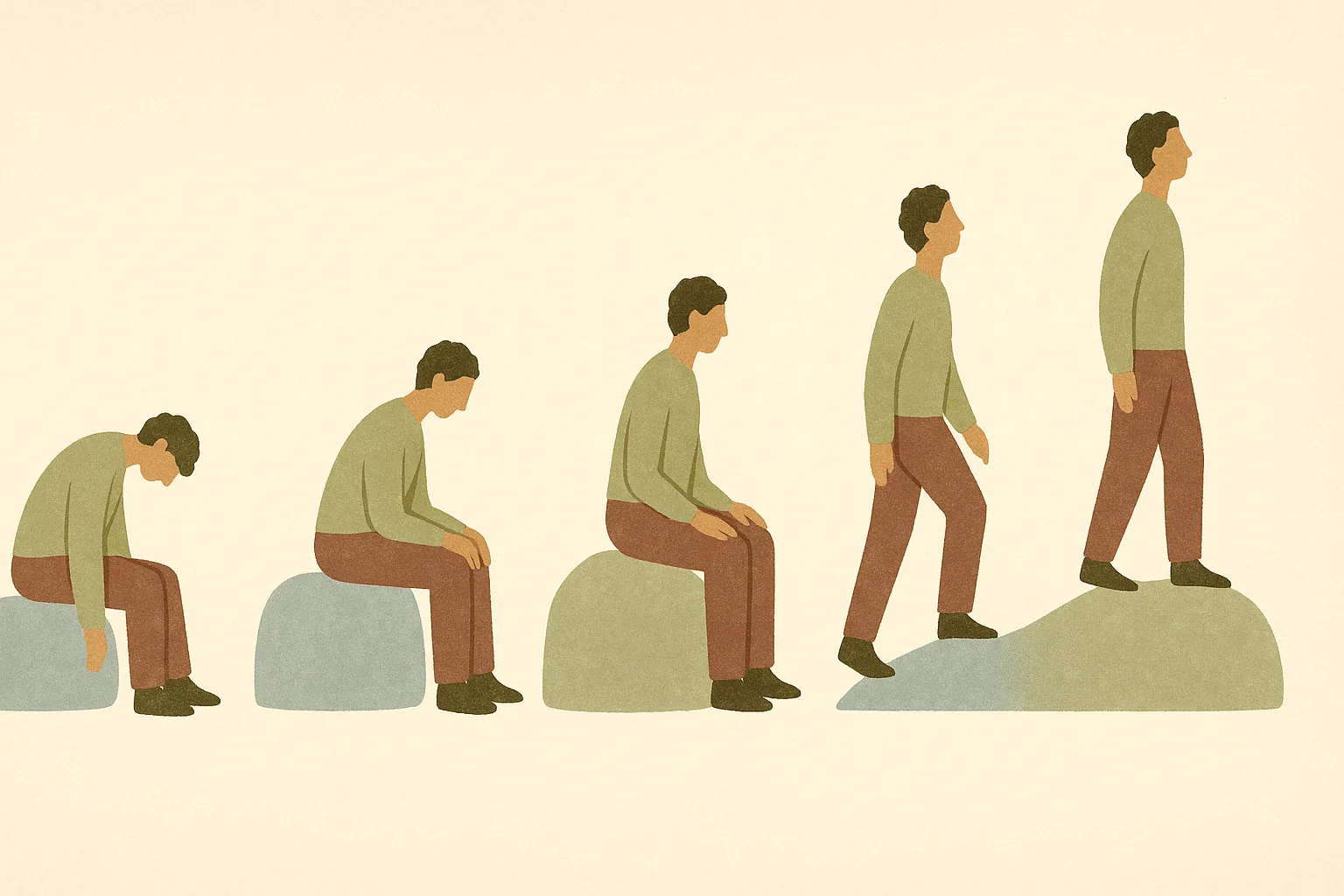
What does it take to recover from burnout?
Recovering from burnout takes both real recovery time and a change in the conditions that drained you, usually over weeks to months. Rest helps, but rest alone rarely fixes it if you return to the same overload. Per the World Health Organization, burnout is a syndrome resulting from chronic workplace stress that has not been successfully managed.
That definition matters. Burnout is not a character flaw or a sign you are weak. It is what happens when demands outrun your capacity for too long, and the fix is not "try harder."
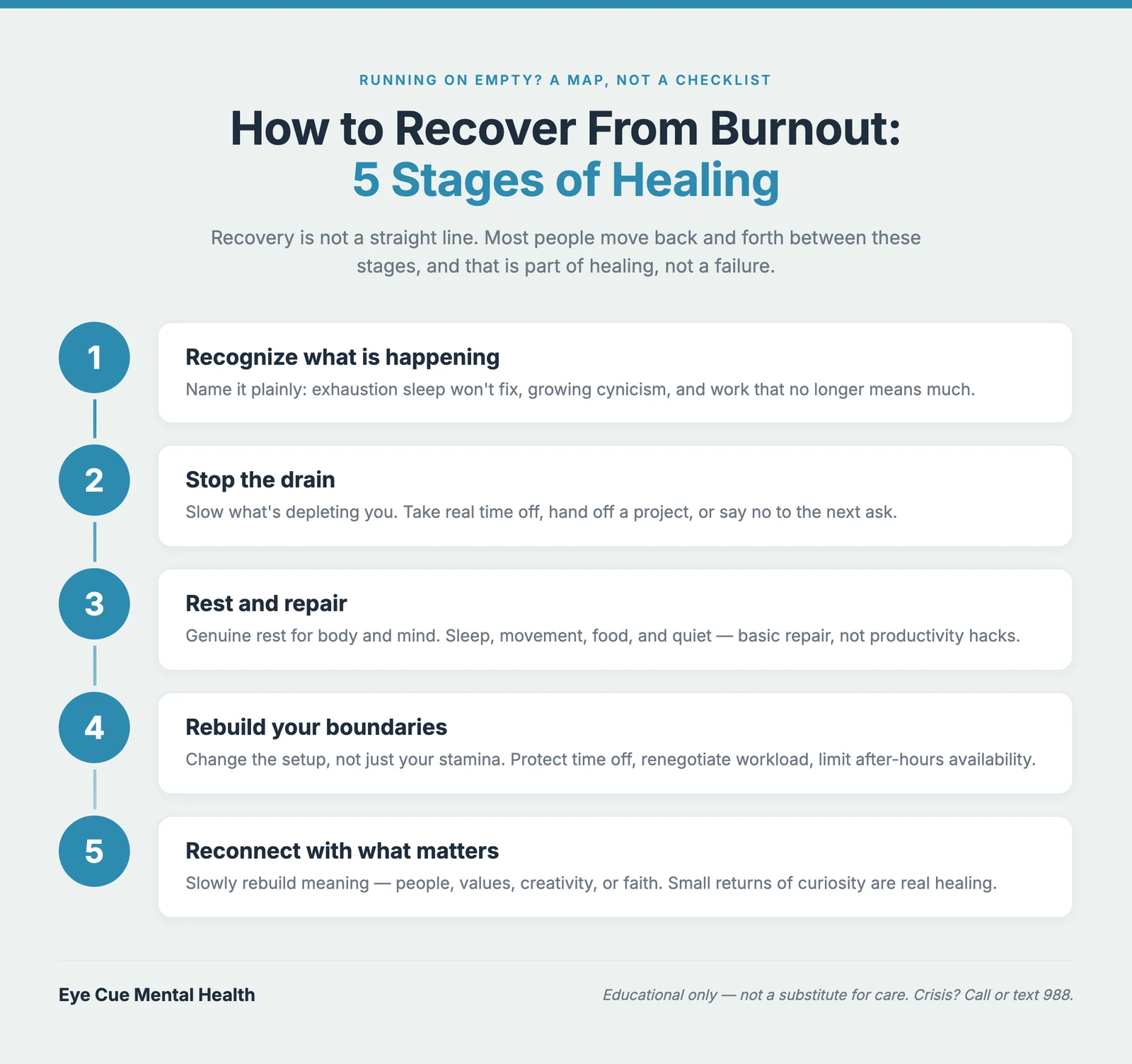
In my office, I walk clients through recovery in five stages. They are not a straight line. Most people slide between them, and that is normal. Here is how each stage tends to look.
The 5 stages of recovering from burnout
Recovery from burnout moves through five stages: recognizing it, stopping the drain, resting and repairing, rebuilding your boundaries, and reconnecting with what matters. Think of these as a map, not a checklist. You may revisit an earlier stage when a stressful week hits, and that is part of healing, not a failure.
Stage 1: Recognize what is happening
The first stage is naming it. You cannot address burnout while you are still telling yourself you are just tired. Recognition means noticing the pattern: deep exhaustion that sleep does not touch, growing cynicism or detachment, and a sense that your work no longer means much.
Those three signs, exhaustion, mental distance, and reduced effectiveness, are the core features clinicians look for. Many of the people I see have felt this way for months before they let themselves call it burnout. Give yourself permission to say it plainly. That honesty is where recovery starts.
Stage 2: Stop the drain
Once you see it, the next stage is to slow or stop what is depleting you. You cannot refill a cup while it is still pouring out. That might mean taking real time off, handing off a project, saying no to the next ask, or telling someone you trust that you are not okay.
I know this is easier said than done, especially if money, immigration status, or family duty makes stepping back feel impossible. The goal is not to quit your life overnight. It is to create even a small gap where the pressure eases enough for your body to notice safety again.
Stage 3: Rest and repair
The third stage is genuine rest, and it is more than one long weekend. Chronic stress keeps your nervous system in a low-grade alarm state, and it takes time to come down. Sleep, movement, food, and quiet all matter here, not as productivity hacks but as basic repair.
Rest also means mental rest. That can look like fewer obligations, less scrolling, and more of whatever actually calms you. Be patient with this stage. If you have been depleted for months, your energy will not bounce back in a few days, and pushing to feel "productive" again too soon is how people relapse.
Stage 4: Rebuild your boundaries
The fourth stage is where recovery becomes durable. If you rest and then return to the exact conditions that burned you out, the burnout usually comes back. Rebuilding boundaries means changing the setup, not just your stamina.
In practice, this is protecting time off, renegotiating workload, limiting after-hours availability, and letting go of the belief that you have to say yes to everything. For many of my clients, this is the hardest stage, because it touches guilt, identity, and old family messages about worth and hard work. It is also the stage that keeps burnout from returning.
Stage 5: Reconnect with what matters
The final stage is coming back to yourself. Burnout flattens things: you stop enjoying what you used to, and relationships feel like one more demand. Reconnecting means slowly rebuilding meaning, whether that is people, values, creativity, or faith.
This stage is quiet and personal. You start caring again, doing things because you want to, not because you must. If you notice small returns of curiosity or warmth, that is a real sign of healing. Recovery is not about becoming a machine that never gets tired. It is about building a life you do not need to escape from.
Is it burnout or depression?
Burnout and depression overlap, but they are not the same, and telling them apart matters for getting the right help. Burnout is generally tied to a specific ongoing stressor, often work or caregiving, and it tends to ease when you get real distance from that source. Depression usually does not.
Per the National Institute of Mental Health, depression is a common but serious mood disorder that affects how you feel, think, and handle daily activities across most areas of life, often for two weeks or longer. Depression does not lift simply because you take a vacation, and it can include hopelessness, worthlessness, or thoughts of death that go beyond job exhaustion.
The two can also occur together, and untreated burnout can slide into depression over time. Because of that overlap, I do not want you to self-diagnose from a blog post. A licensed clinician can tell them apart in an assessment, and the distinction shapes the plan. If low mood, loss of interest, and hopelessness are the loudest part of your experience, our depression therapy page is a better starting point, and if constant worry drives the exhaustion, anxiety therapy may fit better.
When should you get professional help for burnout?
Reach out for professional help when burnout has lasted for weeks, is affecting your sleep, relationships, or ability to function, or when rest is not helping. You do not need to hit a breaking point first. Per the Mayo Clinic, unaddressed job burnout can affect your physical health and contribute to problems like insomnia and increased illness.
A therapist can help you sort out whether it is burnout, depression, anxiety, or a mix, and then build a recovery plan you can actually follow. At Eye Cue Mental Health, that usually looks like a focused course of individual therapy to rebuild your capacity and your boundaries. Because we accept Medi-Cal and several private plans and offer telehealth across California alongside in-person sessions in Cerritos, it is easier to start before you hit the wall.
One more thing, and I mean it. If you ever feel like you cannot go on, or you are having thoughts of hurting yourself, please call or text 988, the Suicide and Crisis Lifeline, any time. Burnout can get that heavy, and reaching out is strength, not weakness.
The questions we hear most about recovering from burnout, answered in plain language.
Ready to feel like yourself again? Start therapy for burnout
You do not have to keep pushing through on fumes. If exhaustion, cynicism, and dread have worn you down, individual therapy at Eye Cue Mental Health gives you a private, structured space to recover and rebuild boundaries that last. We see clients in person in Cerritos and by video across California, and we accept Medi-Cal and many private plans. Call 562-860-2891 to talk it through.
This article was reviewed by Saqib Iqbal, LCSW, founder of Eye Cue Mental Health in Cerritos, California. He supervises the clinical team and reviews the practice's mental health guides for accuracy.
Frequently asked questions
What are the 5 stages of burnout recovery?
A common way to map recovery is five stages: recognizing burnout, stopping the drain, resting and repairing, rebuilding boundaries, and reconnecting with what matters. These are not rigid steps you pass once. Most people move back and forth between them, and healing takes weeks to months, not days.
How long does it take to recover from burnout?
There is no fixed timeline, and anyone promising a quick fix is not being honest with you. For many people, meaningful recovery takes several weeks to several months, depending on how long the burnout built up and whether the underlying stressors change. Rest alone is rarely enough; the conditions usually have to change too.
What is the difference between burnout and depression?
Burnout is generally tied to chronic stress from a specific role, often work or caregiving, and tends to ease when you get real distance from that source. Depression is a mental health condition that colors most areas of life and does not lift just because you take time off. The two overlap and can occur together, so a licensed clinician's assessment matters.
Can burnout go away on its own?
Sometimes early, mild burnout eases with rest and a real change in workload. More often, if the draining conditions stay the same, symptoms return once you go back. Recovery usually needs both recovery time and a change in the situation, and for many people, support from a therapist speeds that along.
When should I see a therapist for burnout?
Consider reaching out if exhaustion, cynicism, or dread has lasted for weeks, if it is affecting your sleep, relationships, or ability to function, or if rest is not helping. You do not need a diagnosis first, and you do not have to wait until you hit a wall. Call us at 562-860-2891 to talk it through.
Individual therapy for burnout, stress, and exhaustion in Cerritos and by telehealth across California, covered by Medi-Cal.
Learn moreEye Cue Mental Health is a psychotherapy practice and does not prescribe medication. This article is educational and is not a diagnosis or a substitute for professional care. If you are in crisis, call or text 988 (Suicide and Crisis Lifeline) any time.
